4905 search results - page 81 / 981 » Aging and Human Performance |
141
Voted
HCI
2009
15 years 1 months ago
2009
This paper introduces our research which aims to develop a design approach for ADAS applications in which human factors (including stakeholder feedback and objective performance me...
122
click to vote
ICCV
2009
IEEE
16 years 8 months ago
2009
IEEE
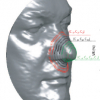
In this paper we explore the use of shapes of noses for
performing partial human biometrics. The basic idea is to
represent nasal surfaces using indexed collections of isocurves,...
134
Voted
WSC
2008
15 years 5 months ago
2008

Despite increasing dependency on technology, the importance of humans is expected to increase and to provide a realistic basis for decision support; both technical and organizatio...
119
click to vote
CORR
2007
Springer
15 years 3 months ago
2007
Springer

It has been reported that virtual reality can be a useful tool for ergonomics study. The proposed integrated simulation system aims at measuring operator’s performance in an int...
153
Voted
WIAMIS
2009
IEEE
15 years 10 months ago
2009
IEEE

An adaptive, invariant to user performance fluctuation or noisy input signal, gesture recognition scheme is presented based on Self Organizing Maps, Markov Models and Levenshtein...