822 search results - page 62 / 165 » Comparisons between Human and Computer Recognition of Faces |
246
click to vote
CVPR
2009
IEEE
17 years 1 months ago
2009
IEEE
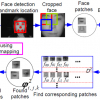
This paper deals with a new problem in face recognition
research, in which the enrollment and query face samples
are captured under different lighting conditions. In our
case, t...
140
click to vote
AAAI
2000
15 years 7 months ago
2000

Self-organizing models develop realistic cortical structures when given approximations of the visual environment as input, and are an effective way to model the development of fac...
171
click to vote
HCI
2009
15 years 4 months ago
2009

Due to its convenient, low physical restraint, and electric noise tolerant features, functional near-infrared spectroscopy (fNIRS) is expected to be a useful tool in monitoring use...
194
click to vote
CVPR
2007
IEEE
16 years 8 months ago
2007
IEEE

The estimation of head pose angle from face images is an integral component of face recognition systems, human computer interfaces and other human-centered computing applications....
146
click to vote
IJON
2002
15 years 5 months ago
2002

Self-organizing computational models with specific intracortical connections can explain many features of visual cortex. However, due to their computation and memory requirements,...