10454 search results - page 70 / 2091 » Modeling the Experience of Emotion |
166
click to vote
FDG
2009
ACM
16 years 20 days ago
2009
ACM

Successful lighting in video games is more than a physically accurate illumination model. Aesthetics and function are of equal or greater importance. Lighting designers may deviat...
268
click to vote
EMNLP
2011
14 years 5 months ago
2011
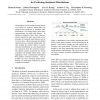
We introduce a novel machine learning framework based on recursive autoencoders for sentence-level prediction of sentiment label distributions. Our method learns vector space repr...
169
click to vote
IJVR
2008
15 years 6 months ago
2008
This paper describes the architecture for a virtual agent and the implementation of its Affection Module. A novel affective model is proposed based on Probabilistic Fuzzy Cognitive...
294
click to vote
AIHC
2007
Springer
16 years 10 days ago
2007
Springer

Affective and human-centered computing have attracted a lot of attention during the past years, mainly due to the abundance of devices and environments able to exploit multimodal i...
160
click to vote
INTERNET
2010
15 years 4 months ago
2010
abstractions, concepts, and actions that characterize human experiences. This will herald computing for human experience (CHE). The CHE vision is built on a suite of technologies t...